
Risk Assessment of Venous Thromboembolism among Hospitalized Patients using the Modified 3-Tier Caprini Score at Services Hospital, Lahore: A Cross-Sectional Study
Correspondence and article notes 8
ABSTRACT
Background: Venous thromboembolism (VTE) is a leading, yet largely preventable, complication of hospitalization. Hospitalization itself contributes to immobility, acute illness, and invasive interventions and thus significantly increases this baseline risk. Early identification of at-risk patients is essential to interrupting the pathway from risk exposure to clinical event and allows appropriate thromboprophylaxis to be initiated before complications such as pulmonary embolism or post-thrombotic syndrome develop.
Objective: The objective of the study was to assess the risk of venous thromboembolism among hospitalized patients using the modified 3-tier Caprini score at Services Hospital Lahore.
Methodology: A cross-sectional study was conducted among 350 patients using non-random convenience sampling technique (sample size calculated from the WHO sample size calculator) in the medical, surgical and allied wards (medical, surgical, gynecology, orthopedics and others) of Services Hospital Lahore. The modified 3-tier Caprini score was used to assess the risk of thromboembolism among hospitalized patients in these wards. The data were collected over a period of 3 months from November 2024 to January 2024. Bivariate analysis using the chi-square and Fisher's exact test was applied; identified variables were entered into a multivariable binary logistic regression to identify factors associated with high Caprini defined-VTE risk, with adjusted odds ratios (AOR) and 95% confidence intervals.
Results: The study did not find any hospitalized patient at low risk; 124 patients (35.4%) were at moderate risk and 226 patients (64.6%) were found at high risk. All departments of the hospital included in the study were at similar risk of developing venous thromboembolism. Male gender (AOR = 1.49, p = 0.038) and employment (AOR = 1.52, p =0.046) were associated independently with Caprini defined high-risk VTE. Age, blood clotting disorders (AOR = 3.36, p < 0.001), trauma (AOR = 6.48, p < 0.001), and stillbirth (AOR = 8.94, p < 0.001) were also associated with high risk VTE score (p < 0.05 with a 95% confidence level).
Conclusion: The findings highlight a substantial prevalence of high risk VTE among hospitalized patients, with consistent risk observed across all hospital departments, emphasizing the necessity of vigilant risk assessment and preventive measures in all departments of hospital settings. Age, employment, gender, trauma, blood clotting disorders, and stillbirths showed strong associations.
Keywords: risk assessment- hospital admission---thromboembolism --- factors associated----Caprini score—thromboembolic risk (VTE).
Introduction
Venous thromboembolism (VTE), encompassing deep vein thrombosis (DVT) and pulmonary embolism (PE), ranks as the third most common cardiovascular condition after myocardial infarction and stroke, affecting an estimated 10 million people worldwide each year (1).Roughly 50–70% of VTE cases are hospital-acquired, with risk driven by a combination of patient-level factors such as age, gender, immobility, BMI, and hormonal contraception alongside clinical conditions such as surgery, trauma, malignancy, and cardiovascular events, as well as acquired and inherited coagulation disorders (2, 3).
To standardize risk stratification, guidelines such as NICE NG89 require that VTE risk be assessed among patients aged 16 and above in at least 95% of hospital admissions within 14 hours of the admission (4). A notable discrepancy between VTE guidelines and clinical practice therefore recommends standardized risk-assessment tools to improve appropriate thromboprophylaxis (5).
Among various validated risk assessment tools for VTE, the Caprini score is most widely used. (6). The Caprini RAM showed greater sensitivity, specificity, and overall predictive performance than other risk assessment models, enabling more effective differentiation between low- and high-risk VTE among hospitalized patients of Asian population (7).
Although VTE remains a leading preventable cause of hospital morbidity and mortality, evidence remains scarce in low-income countries like Pakistan, where hospital resources, prophylaxis practices and patient at-risk profiles differ significantly from high- income countries. Recent locally generated evidence is needed to characterize its burden among hospitalized adults in Pakistan. Secondly, the available local evidence is limited to specific subgroups (8).with none assessing risk across medical, surgical, orthopedics, and gynecological wards together. As a result, VTE remains under recognized among the patients that fall outside conventional risk categories. No prior Pakistani study has compared the risk across different hospital wards, leaving unaddressed whether the thromboprophylaxis should be department specific or hospital wide. This study addresses that gap by assessing VTE risk across all major ward types at a tertiary care hospital in Pakistan, to generate locally relevant evidence for risk-stratified thromboprophylaxis
METHODS
This cross-sectional study was conducted among 350 patients admitted to the medical, surgical and allied inpatient departments (medical, surgical, gynecology, orthopedics and others) of Services Hospital, Lahore, a tertiary care hospital in Pakistan, over a 3-month period from November to January 2024-25. The Ethical approval was obtained from the Institutional Review Board (IRB), Services Institute of Medical Sciences (SIMS)/Services Hospital, Lahore (Ref. No. IRB/2024/1479/SIMS), dated 14.11.2024. Patients were recruited using non-random convenience sampling across concurrently operating medical and surgical wards, selected for feasibility and cost-effectiveness given resource constraints. Sample size was calculated by using WHO statistical software S-size by using the formula of estimating the population proportion with specified relative precision, estimated population as 56%, (3) specified relative precision of 10%, and confidence level of 95%.
n = Z²₁₋α/₂ × (1 − P) / (ε² × P)
| n | Required sample size | |
|---|---|---|
| Z₁₋α/₂ | Standard normal value for the confidence level | 1.96 (95%) |
| P | Anticipated population proportion | 0.56 |
| ε | Relative precision | 0.10 |
The minimum required sample size calculated was n= 302. After allowing for an anticipated non-response rate of 10% (302 / 0.90 ≈ 336), the sample size was rounded up to 350 for feasibility.
All patients were assessed for Caprini-defined VTE risk within 24 hours of hospital admission, consistent with NICE guidance that every hospitalized patient be considered at risk of VTE from the day of admission. A modified three-tier Caprini classification—low risk (0–4), moderate risk (5–8), and high risk (≥9)--was adopted based on cutoffs validated by Hachey et al (9), and subsequently corroborated by Song et al. (10) and Cui et al. (11).This simplified three-tier structure was selected over the original multi-tier Caprini classification because it offers more direct clinical applicability for thromboprophylaxis decisions and better fits the sample size and resource constraints hospital setting. The Caprini risk factor was operationally defined and measured as follows: age (calculated from the date of birth to the date of hospital admission); body mass index (calculated from height and weight recorded at admission); type and duration of surgery (extracted from operative notes for surgical ward patients); immobility, bed rest, and cast application (extracted from nursing and medical records); malignancy and comorbid conditions (extracted from clinical records); thrombophilia markers (extracted from laboratory reports); acute events, including myocardial infarction, stroke, fracture, trauma, and spinal cord injury (confirmed via radiological or clinical documentation); and sex-specific risk factors ,including pregnancy, hormone replacement therapy, or oral contraceptive use, and stillbirth(self-reported by patients and corroborated against obstetric records). The total Caprini score was calculated by summing all applicable weighted points (range 1–5 per factor) according to the modified three-tier model described above. All patients aged ≥18 years admitted to medical, allied medical, surgical, and allied surgical wards, including preoperative surgical patients within 24 hours of admission, were eligible. By excluding patient with physician-confirmed diagnoses of VTE, postoperative patients (surgical-ward patients were therefore recruited preoperatively, within 24 hours of admission) and those with contraindications to thromboprophylaxis, this study specifically targeted the underrecognized VTE risk burden among hospitalized populations. The study was conducted after ethical approval of the institutional review board with IRB/2024/1479/SIMS. Informed written consent was obtained from all participants prior to data collection; confidentiality of patient’s information was maintained throughout. Data were collected via face-to-face interview using a structured questionnaire derived from the Caprini risk score. The questionnaire was composed of 3 sections: Section 1: Socio-demographic Profile that included the patient’s personal information Section 2: Medical history that included the patient’s drug history, comorbid diseases, risk factors, and all Caprini Risk Score (CRS) components. Section 3: In this section patients were categorized on the basis of their total score. The data was entered and analyzed using the Statistical Package for the Social Sciences (SPSS 23). The continuous variable, such as the Caprini Score was reported as mean ± standard deviation; later on the Caprini score was categorized into moderate risk and high risk, as no patient in the current study scored in the low risk range. In addition to composite Caprini risk stratification, each individual risk factor was analyzed to identify its association with Caprini-defined high VTE risk.
Categorical variables such as age, gender, residence, occupation, education, comorbid conditions, and department of distributions, female-related factor, and trauma were reported as frequency (percentage). Bivariate analysis was performed to assess the association of the Caprini defined VTE risk with age, gender, residence, occupation, education, and comorbid condition, distribution of patients by department, female-related factor and trauma using the chi-square test, where an expected cell count was 5 or less: Fisher’s exact test was used instead. The binary outcome was high VTE risk (Caprini score ≥9) versus moderate VTE risk (Caprini score 5–8), since no patients were classified as low risk. Variables with p < 0.25 on bivariate analysis were entered into a multivariable binary logistic regression model to identify independent factors associated with high thromboembolic risk while controlling for confounding. Adjusted odds ratios (AOR) with 95% confidence intervals were reported for each variable, with the lowest-risk category serving as the reference group. Statistical significance was set at p < 0.05. Model fit was evaluated using the Hosmer-Lemeshow test with the backward stepwise likelihood ratio method. Odds ratios were calculated by comparing each category with the reference group for the multi-category variable and corresponding p-values were reported. Confounding variables were handled through exclusion criteria, and the use of multivariable binary logistic regression in data analysis.
RESULTS
The majority of hospitalized patients assessed using the 3-tier Caprini Risk Assessment Model were classified as high risk for thromboembolism, with the remainder falling into the moderate-risk category. The overall mean Caprini score was 13.3+5.09, reflecting an elevated risk among hospitalized patients. Given that identical Caprini scores can arise from different combinations of risk factors, individual components of the score were additionally analyzed to identify factors associated with high-risk VTE in our population, as their relative contribution may differ.
On univariate analysis, age, gender, occupation, trauma, and presence of a blood clotting disorder were significantly associated with high-risk classification, while residence, education, and department distribution showed no significant association. Among female-related factors, history of stillbirth was significantly associated with high-risk status, whereas pregnancy/postpartum status and hormone replacement therapy were not.
On multivariable logistic regression, trauma emerged as the strongest factor of association with high-risk classification, followed by presence of a blood clotting disorder. Increasing age was independently associated with higher odds of high-risk status compared with the youngest age group, though the relationship was not strictly linear across age groups. Male gender and employment status were also independently associated with high-risk classification, while education level was not an independent factor after adjustment.
Among female patients, a history of stillbirth showed a strong independent association with high-risk classification, whereas pregnancy/postpartum status were not significant after adjustment. Hormone replacement therapy did not meet the threshold for inclusion in the multivariable model.
Table1: Frequency of sociodemographic and disease-related factors (n=350).
| Variables | categories | Frequency n (%) | |
|---|---|---|---|
| Age (years) |
18-40 | 118 (33.7%) | |
| 41-60 | 159 (45.4%) | ||
| 61 and above | 73 (20.9%) | ||
| Gender | Male | 203 (58%) | |
| Female | 147 (42%) | ||
| Residence | Urban | 167 (47.7%) | |
| Rural | 183 (52.3%) | ||
| Occupation | unemployed | 162 (46.3%) | |
| employed | 188 (53.7%) | ||
| Education | illiterate | 100 (28.6%) | |
| Matric and below | 152 (43.4%) | ||
| Intermediate and above | 98 (28%) | ||
| Distribution of patients by departments | Medical | 80 (22.9%) | |
| Surgical | 88 (25.1%) | ||
| Gynecology | 33 (9.4%) | ||
| Orthopedics | 95 (27.1%) | ||
| others | 54 (15.5%) | ||
| Trauma Blood clotting disorder |
Present | 166 (47.5%) | |
| Absent Present Absent |
184 (52.5%) 173 (49.4%) 177 (50.6%) |
||
| Female-related factors (n=147)*percentages are not mutually exclusive as all females were neither pregnant/Postpartum, nor having still births and HRT |
Stillbirth | 48 (32.7%) | |
| Pregnancy/postpartum | 45 (30.6%) | ||
| Hormone replacement therapy | 38 (25.9%) | ||
| Mean Caprini score Mean + S.D 13.3+5.09 | |||
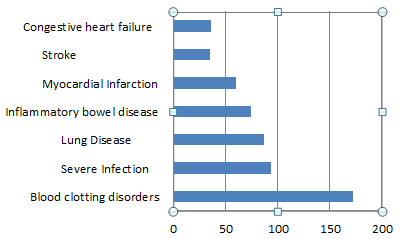
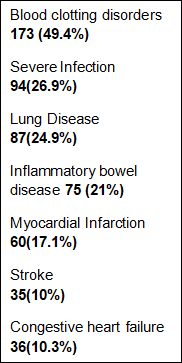
*Percentages are not mutually exclusive as patient may have more than one comorbid condition.
Among 350 patients assessed, the majority were classified into the high-risk category (n =226, 64.6%), followed by moderate risk (n =124, 35.4%). Notably, no patient in the study population was classified into the low-risk category (0–4 points), reflecting the high baseline VTE risk burden among hospitalized patients in this setting.
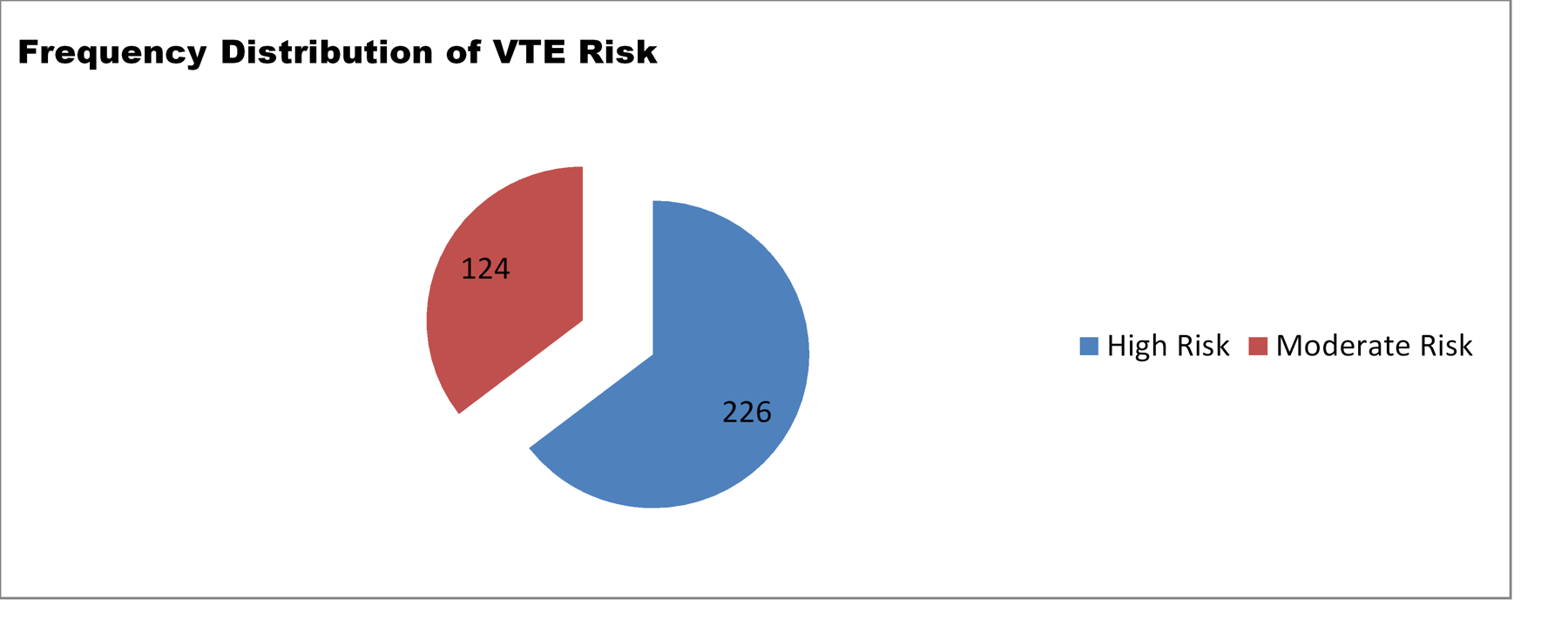
Table 2: Association of sociodemographic and disease-related factors with VTE (n=350)
| Variables | Categories | Moderate Risk n | High Risk n | p-value | ||
|---|---|---|---|---|---|---|
| Age (years) |
18-40 | 62(17.8%) | 56(16%) | *<.001 | ||
| 41-60 | 43(12.2%) | 116(33%) | ||||
| 61 and above | 19(5.4%) | 54(15.4%) | ||||
| Gender | Male | 62(17.7%) | 141(40.3%) | *0.024 | ||
| Female | 62(17.7%) | 85(24.3%) | ||||
| Residence | Urban | 54(15.4%) | 113(32.3%) | 0.269 | ||
| Rural | 70(20%) | 113(32.3%) | ||||
| Occupation |
Unemployed | 69(19.7%) | 93(26.6%) | *0.09 | ||
| employed | 55(15.7%) | 133(38%) | ||||
| Education | Illiterate | 40(11.4%) | 60(17.1%) | 0.052 | ||
| Matric and below | 59(16.9%) | 93(26.5%) | ||||
| Intermediate and above | 25(7.1%) | 73(20.8%) | ||||
| distribution of patients by departments |
Medical | 30(8.57%) | 50(14.2%) | 0.46 |
||
| Surgical | 25(7.1%) | 63(18%) | ||||
| Gynecology | 10(2.9%) | 23(6.5%) | ||||
| Orthopedics | 37(10.6%) | 58(16.6%) | ||||
| others | 22(6.2%) | 32(9.1%) | ||||
| Trauma | Absent | 102(29.1%) | 82(23.4%) | *<0.001 | ||
| Present | 22(6.3%) | 144(41.2%) | ||||
| Blood clotting disorder | Absent | 90(25.7%) | 87(24.9%) | *<0.001 | ||
| Present | 34(9.7%) | 139(39.7%) | ||||
| Total (n=350 *denominator) | 124(35.4%) | 226 (64.6%) | ||||
| Female-related factors *For female-related factors denominator is female sample i.e.( n=147) |
Pregnancy/ postpartum | absent | 48(32.7%) | 54(36.7%) | 0.071 | |
| present | 14(9.5%) | 31(21.1%) | ||||
| Still birth | absent | 57(38.8%) | 42(28.6%) | *<0.001 | ||
| present | 5(3.4) | 43(29.2%) | ||||
| Hormone replacement therapy | absent | 48(32.7%) | 61(41.5%) | 0.439 |
||
| present | 14(9.5%) | 24(16.3%) | ||||
| Total (n=147) | 62 (42.2%) | 85 (57.8%) | ||||
(Chi-square test /or Fisher's exact test, (where cell counts <5) used)
(p-value <0.05% is considered significant at confidence interval 95%.)
Table3: Association of sociodemographic and disease -related factors with VTE thromboembolism
(n=350). (Multivariable binary logistic regression )
| Sociodemographic and disease-related factors | Moderate Risk Frequency, n (%) |
High Risk Frequency, n (%) |
Exp B (CI 95%) |
p-value | |
|---|---|---|---|---|---|
| Age (years) |
18-40 | 62(17.8%) | 56(16%) | 1 | |
| 41-60 | 43(12.2%) | 116(33%) | 2.34 (1.38-3.96) |
0.002 | |
| 61 and above | 19(5.4%) | 54(15.4%) | 2.21 (1.27-3.85) |
0.005 | |
| Gender | Female | 62(17.7%) | 85(24.4%) | 1 | |
| Male | 62(17.7%) | 141(40.2%) | 1.49 (1.02-2.18) |
0.038 | |
| Occupation |
Unemployed | 69(19.7%) | 93(26.6%) | 1 | |
| employed | 55(15.7%) | 133(38%) | 1.52 (1.01-2.29) |
0.046 | |
| Education | Illiterate | 40(11.4%) | 60(17.1%) | 1 | |
| Matric and below | 59(16.9%) | 93(26.5%) | 1.02 (0.61-1.71) |
0.941 | |
| Intermediate and above | 25(7.1%) | 73(20.8%) | 1.48 (0.89-2.46) |
0.129 | |
| Trauma | Absent | 102(29.1%) | 82(23.4%) | 1 | |
| Present | 22(6.3%) | 144(41.2%) | 6.48 (3.45-12.15) |
<0.001 | |
| Blood clotting disorder | Absent | 90(25.7%) | 87(24.9%) | 1 | |
| Present | 34(9.7%) | 139(39.7%) | 3.36 (1.89-5.96) |
< 0.001 |
|
| Total (n=350) | 124(35.4%) | 226 (64.6%) | |||
| Female-related factors (n=147) |
|||||
DISCUSSION
Hospitalization is one of the well-recognized provoking risk factors for venous thromboembolism. Clinical guidelines widely recommend routine risk assessment of venous thromboembolism among patients after hospital admission to incorporate required management and prevent the notorious consequences.
In the present study, participants were grouped as: age group of 18–40years, 41–60 years, and above 60 years. The majority of patients in age group 41-60 years were found to be at high risk of VTE. There was a statistically significant association between age and VTE risk. The present result was also supported by the cross-sectional study of Pawar et al., who reported increased risk of venous thromboembolism in age group of 41-60 years (12).Ren et al., similarly found a statistical association of age with the risk of thromboembolism (p < 0.01). (13).This may be explained by the rise in plasma D-dimer with age, a biological marker for DVT risk (14). A Canadian meta-analysis also linked the association of increasing age with the risk of thromboembolism. (15). Vulnerability to VTE risk in older age may be explained by altered blood vessel physiology along with multiple comorbid health conditions in that age group. Differences in specific age ranges implicated across studies likely reflect different demographic profiles, hospital trends, and awareness levels between developing and developed countries, underscoring the importance of active VTE surveillance in middle-aged and elderly hospitalized patients.
Male hospitalized patients in the current study were analyzed at higher risk levels of VTE. The population of patients identified with moderate thromboembolic risk included equal numbers of female and male patients, but a marked gap appeared in the high-risk category: 40.2% of males were at high risk versus 24.4% females. This is consistent with Marcus et al., who reported that men are more likely to experience their first VTE. (16). the present study results were in contrast with a nationwide Danish cohort by Carl Arne et al., that documented a lifetime increased risk of VTE in females. (17).The predominance of high-risk classification among males might be explained by the prevalence of multifactorial predisposing conditions such as cardiovascular diseases, trauma, or major surgeries in the current study, though this warrants further study.
No significant association was found between place of residence and VTE risk. The surveyed population was relatively evenly distributed; urban areas represented 47.7% and rural ones 52.3%. The moderate risk was more common among rural resident (15.4% urban vs. 20% rural).The high-risk group was evenly split (32.3% each). In the current study, no statistical association of risk of venous thromboembolism was found in the patients whether residing in urban or rural areas, consistent with Mituku et. al,who also did not find association between residence and venous thromboembolism risk (3).
Occupation was significantly associated with VTE risk (AOR=1.52, CI 95%, p=0.046)). Employed patients made up a larger contribution (38%) to high risk. This finding is contrast with a recent hospital-based cross-sectional study by Mitiku et. al. (3) conducted in Ethiopia, which did not find significant association between occupational category (farmer, merchant, student, daily laborer, or government employee) and VTE risk. The finding in the present study might be explained by higher employment leads to comfortable and white-collar jobs along with financial stability that leads to drawing attention to health issues and seeking medical care without any delay.
Education level showed overall no statistical association with VTE risk, though patients with education matric and below showed inverse relation to risk (high-risk group 26.5% vs. moderate-risk 16.9%). The study of Jorgensen et. al. established the role of education in inverse relationship with the risk of developing venous thromboembolism.(18). While Elgemaily et. al., discovered that those with higher levels of health education had significantly better therapy outcomes as compared to those with inadequate understanding of DVT.(19).The presence of non-significant association of education level in current study might be explained by the access to the health system and its offered treatment along with individual involvement in earning a livelihood and neglecting personal health in a developing country like Pakistan, where competition of survival is more than opportunities. However, there is no single relationship between education and VTE risk since it is influenced by a person’s community and setting.
In the present study all hospital departments included were at similar risk. There was no statistical significance (p=0.46) in the risk assessment of venous thromboembolism. This was in accordance with Rocha et. al. who showed almost the same proportion at high risk ,among medicine and surgery wards patients (20). In a study conducted at Aga Khan Hospital by Ismail no statistical association was found in comparison of compliance of assessment between medical and surgical patients (21). In a prospective study by Nkoke about 94.6% in medical patients and 92.8% in surgical patients were found at risk of venous thromboembolism almost having the same proportion of both medical and surgical patient at risk of venous thromboembolism (22). In contrast to present study Rathore et. Al. analyzed a statistical association across different wards (23).The consistency of risk across department in the present study supports a hospital-wide, rather than department-specific, approach to VTE prevention.
Trauma was statistically associated (AOR=6.48, CI 95%, p<0.001) with risk of venous thromboembolism. As this was reinforced with the study by Linberry et al where majority of VTE event occurred even in the presence of low severity index of trauma(24). In a study by Porterfield trauma was found to increase the risk of venous thromboembolism (25). In a retrospective review by Bassa et al in Ireland about 3.6 cases/1000 people-year of VTE was found in trauma patients (26). Trauma at any level whether at cellular or gross is the basic phenomenon to blood stasis, hypoxia, vascular damage and coagulation cascade activation which are the core mechanisms in thrombo-embolism.
Blood clotting disorders showed strong association (AOR=3.36, CI 95%, p<0.001) with consequent thromboembolic risk. Among patients at moderate risk, 25.7% had no known clotting disorder, compared with 9.7% who had a clotting disorder. In the high-risk group, 39.7% of patients had a clotting disorder, whereas 24.9% did not. This supports, continued screening for clotting disorders at admission, since early identification could help prevent thromboembolic complications. Khan et al. in a study from Northern Pakistani (27) similarly found a significant association between clotting disorders and VTE.
Although pregnancy, is an established risk factor of provoked venous thromboembolism. In the present study among 147 women, about 45 women were pregnant or given birth within the last month, about 21.1% of females were found at high risk of developing venous thromboembolism, but no statistically significant association was found between risk of venous thromboembolism and pregnancy. In a Chinese study by Menghan Sha et al overall 1.63/1000 pregnancies incidence of venous thrombo-embolism was found(28). While Alsheef et al. found family history and varicose veins, rather than pregnancy status alone, associated with VTE (29). The presence of non-significant association with the risk of venous thrombosis in present study might be explained by a small proportion of females in the present study.
In the present study among 147 women about 48 women had the history of stillbirth and statistically significant (AOR=8.94, CI 95%, p=<0.001) association was found between risk of venous thromboembolism and stillbirth. This is supported by the evidence of literature review by McNestry C et al. that described the 2.5 fold increased chances of venous thromboembolism after stillbirth(30). This is explained by the fact as pregnancy and its complications are hypercoagulable states by themselves and an independent risk of thrombosis.
Among 147 females only 38 females were on hormonal replacement therapy and only 24 females were found at high risk of venous thromboembolism but no statistically significant association was found between risk of venous thromboembolism and hormone replacement therapy. This evidence is also supported by Porterfield et al case control study where Hormone replacement therapy was not linked to increase the risk of thrombosis (25). Another cohort study by Melissa Shyian et al., where HRT association with the risk of venous thromboembolism was not documented (31).
Overall, 64.6% of patients were classified as high risk and 35.4% as moderate risk, with none at low risk. This high-risk burden exceeds the 47.7% reported by Mitiku et al. in an Ethiopian tertiary hospital and the 34% high-risk proportion (41.4% moderate risk) reported from Mullana, Ambala, Haryana. However, it is broadly consistent with the larger Pakistani cohort of Farogh et al. (32), who reported approximately 84% of medical and surgical patients as high risk. Taken together, these findings reinforce the need for systematic VTE risk screening at hospital admission and timely institution of appropriate preventive measures
Notably, no patients in the present study were classified into the low-risk Caprini category (0–4 points), with the entire study population distributed between the moderate and high-risk strata. As a hospital based study recruited from actively admitted medical and surgical wards, patients themselves carried baseline risk contributions from hospitalization including bed rest, reduced mobility, and acute illness each of which independently adds Caprini points. The older age profile and high burden of comorbidities in this tertiary care population likely increased baseline Caprini scores, placing most patients in the moderate or high risk categories. From a clinical standpoint, this finding reinforces the relevance of universal VTE risk assessment at admission, as recommended by NICE guidelines, since even patients not undergoing major surgery or presenting with overt thrombotic risk factors may still fall outside the low risk category once hospitalization-related factors are incorporated into the score.
This study included 350 hospitalized patients, providing a reasonably precise estimate (+5 at 95% confidence interval) drawn from multiple ward types of a single tertiary care hospital, allowing comparison of VTE risk across medical, surgical, orthopedic, gynecological, and other departments; to our knowledge, it is among a limited number of Pakistani hospital-based studies to do so and to examine female-specific risk factors alongside general risk factors. Several limitations should be noted. The study was conducted at a single center over three months, which may limit generalizability to other settings or seasons. Non-random convenience sampling may introduce selection bias, and the absence of low-risk patients, likely reflecting this sampling and ward selection, prevented comparison across all three Caprini strata. The cross-sectional design assesses risk classification at admission rather than incident VTE, so no causal or predictive inference can be drawn.
Conclusion
This cross-sectional study of 350 hospitalized patients at Services hospital Lahore, found a striking absence of low risk patients on Caprini score, with substantial proportion of patients (64.6%) at high risk of VTE and remaining (35.4%) at moderate risk. VTE risk was same across all hospital departments, supports a hospital-wide rather than department specific, thromboprophylaxis strategy. Male gender and employment were independently associated with high Caprini risk; age, trauma, blood clotting disorders, and history of stillbirth were also significantly associated, partly reflecting their scoring within the Caprini instrument. High baseline risk was observed among patients without major surgery or overt thrombotic risk factors. This highlights VTE as an under recognized but preventable cause of morbidity in Pakistani hospital settings. Future prospective, multicenter studies are needed to confirm generalizability and refine risk-based prophylaxis strategies
Author Contributions:
MF, QUAN, AS, HN, IS. MA, FA:
Each author made substantial contributions to the conception and design of the study, or acquisition, analysis, and interpretation of data.
All authors were involved in drafting the manuscript or critically revising it for important intellect content.
All authors approved the final version of the manuscript to be published and agree to be accountable for all aspects of the work.
REFERENCES
- Duah A, Nartey YA, Ekremet K. Risk factors, treatment outcomes and predictors of death of newly diagnosed patients with venous thromboembolism in a quaternary hospital in Ghana. Ghana Med J. 2025;59(4):191-198. doi:10.4314/gmj.v59i4.3. https://doi.org/10.4314/gmj.v59i4.3.
- Yang Z, Qin J. Epidemiological patterns and risk profiling of hospital acquired venous thromboembolism in a tertiary medical center in eastern China: a retrospective cohort study (2023–2024). Front Cardiovasc Med. 2026;13:1707402. https://doi.org/10.3389/fcvm.2026.1707402.
- Mitiku HZ, Assefa Addis B, Edmealem A, Tsegaye D, Biyazin Y, Abate A. Risk stratification and contributing factors of deep vein thrombosis among patients admitted at Debre Markos Comprehensive Specialized Hospital, Ethiopia in 2024. Front Med (Lausanne). 2024;11:1470212. https://doi.org/10.3389/fmed.2024.1470212.
- NHS England. Venous thromboembolism (VTE) risk assessment collection [Internet]. Leeds: NHS England; [cited 2026 Aug3].Availablefrom:https://digital.nhs.uk/data-and-information/data-collections-and-data-sets/data-collections/venous-thromboembolism-vte-risk-assessment-collection
- Bassett J, Schapkaitz E, Jacobson B, Essop R. The use of venous thromboembolism prophylaxis in relation to patient risk profiling (TUNE IN) Wave 3 study. S Afr Med J. 2025 Sep 2;115(8):e3111. doi:10.7196/SAMJ.2025.v115i8.3111. DOI: 10.7196/SAMJ.2025.v115i8.3111
- Wu Z, Du Y, Cai X, Xu Q. Caprini score combined with thrombotic molecular markers for predicting DVT in patients with traumatic fractures. Sci Rep. 2025 Jan 13;15(1):1847. doi:10.1038/s41598-025-85941-z. Erratum in: Sci Rep. 2025 May 13;15(1):16563. doi: 10.1038/s41598-025-85941-z
- Trabulsi N, Khafagy AM, Alhazmi LS, Alghamdi AM, Alzahrani AA, Banaamah MM, et al. Caprini versus Padua venous thromboembolism risk assessment scores: a comparative study in hospitalized patients at a tertiary center. Saudi Med J. 2024;45(4):Article 6. DOI: https://doi.org/10.15537/smj.2024.45.4.20230954
- Ahmed I, Khan K, Akhter N, Shah SA, Hidayatullah S, Chawla D. Frequency of asymptomatic deep vein thrombosis in hospitalized patients with acute exacerbation of chronic obstructive pulmonary disease (COPD). Cureus. 2024;16(9):e69858. doi:10.7759/cureus.69858. DOI: 10.7759/cureus.69858
- Hachey KJ, Hewes PD, Porter LP, Ridyard DG, Rosenkranz P, McAneny D, Fernando HC, Litle VR. Caprini venous thromboembolism risk assessment permits selection for postdischarge prophylactic anticoagulation in patients with resectable lung cancer. J Thorac Cardiovasc Surg. 2015;150(5):1233-9. doi: 10.1016/j.jtcvs.2015.08.039
- Song C, Shargall Y, Li H, Tian B, Chen S, Miao J, Fu Y, You B, Hu B. Prevalence of venous thromboembolism after lung surgery in China: a single-centre, prospective cohort study involving patients undergoing lung resections without perioperative venous thromboembolism prophylaxis. Eur J Cardiothorac Surg. 2019;55(3):455-60. doi: 10.1093/ejcts/ezy323.
- Cui S, Chen S, Li H, Ke L, Liu Y, Jiang R, et al. Risk factors for venous thromboembolism and evaluation of the modified Caprini score in patients undergoing lung resection. J Thorac Dis. 2020;12(9):4805-16. doi: 10.1093/ejcts/ezy323.
- Pawar P, Ayyappan MK, Jagan J, Rajendra N, Mathur K, Raju R. Analysis of Patients with Venous Thromboembolism in a Multi-Specialty Tertiary Hospital in South India. Indian Journal of Vascular and Endovascular Surgery. 2020 Mar;7(1):29. DOI:10.4103/ijves.ijves_31_19
- Ren Y, Liu R. Prevalence and risk factors of deep vein thrombosis in elderly: a systematic review and meta-analysis. Open Medicine. 2026;21(1): 20251333. https://doi.org/10.1515/med-2025-1333
- Zhang K, Zhu Y, Tian Y, Tian M, Li X, Zhang Y. Role of a new age-adjusted D-dimer cutoff value for preoperative deep venous thrombosis exclusion in elderly patients with hip fractures. J Orthop Surg Res. 2021 Dec;16(1):649. DOI: 10.1186/s13018-021-02801-y
- Payne JG, Tagalakis V, Wu C, Lazo-Langner A; CanVECTOR Network. Current estimates of the incidence of acute venous thromboembolic disease in Canada: A meta-analysis. Thromb Res. 2021;197:8-12. doi:10.1016/j.thromres.2020.10.030.DOI: 10.1016/j.thromres.2020.10.030.
- Lind MM, Johansson M, Själander A, Johansson L. Incidence and risk factors of venous thromboembolism in men and women. Thrombosis Research. 2022 Jun 1;214:82–6.https://doi.org/10.1016/j.thromres.2022.04.014
- Arnesen CAL, Veres K, Horváth-Puhó E, Hansen JB, Sørensen HT, Brækkan SK. Estimated lifetime risk of venous thromboembolism in men and women in a Danish nationwide cohort: impact of competing risk of death. Eur J Epidemiol. 2022 Feb 1;37(2):195–203. DOI:10.1007/s10654-021-00813-w.
- Jørgensen H, Horváth‐Puhó E, Laugesen K, Brækkan S, Hansen J, Sørensen HT. Socioeconomic status and risk of incident venous thromboembolism. Journal of Thrombosis and Haemostasis. 2021 Dec 1;19(12):3051–61.DOI: 10.1111/jth.15523 .
- Elgemaily A, Salem H, Al-Shammri M, Eweidah H. The impact of deep venous thrombosis (DVT) education on improving patient's therapeutic outcomes: a cross-sectional descriptive study. Int J Med Res Health Sci. 2021;10:46-50.https://www.researchgate.net/publication/359364182_The_Impact_of_Deep_Venous_Thrombosis_DVT_Education_on_Improving_Patient's_Therapeutic_Outcomes_A_Cross_Sectional_Descriptive_Study
- Rocha D, Lobato CT, Pinto DM, Marques F, Marques T, Guedes C, et al. Venous Thromboembolism Prophylaxis in Medical and Surgical Patients – What’s Our Reality? Cureus [Internet]. 2023 Nov 26 [cited 2025 May 6];15. Available from: https://www.cureus.com/articles/191660-venous-thromboembolism-prophylaxis-in-medical-and-surgical-patients---whats-our-reality.DOI: 10.7759/cureus.49444..
- Ismail A, Jadawji N, Adebayo P, Jusabani A, Hameed K, Zehri AA, et al. Evaluation of venous thromboembolism (VTE) risk assessment and thrombo-prophylaxis practices in hospitalized medical and surgical patients at Aga Khan Hospital Dar es Salaam: single-centre retrospective study. Pan Afr Med J. 2022;42:160 DOI: 10.11604/pamj.2022.42.160.28278..
- Nkoke C, Tchinde Ngueping MJ, Atemkeng F, Teuwafeu D, Boombhi J, Menanga A. Incidence of Venous Thromboembolism, Risk Factors and Prophylaxis in Hospitalized Patients in the South West Region of Cameroon. Vasc Health Risk Manag. 2020 Jul 22;16:317–24. .DOI: 10.2147/VHRM.S205935
- Rathore G, Saklani M. A study to assess the clinical probability of deep vein thrombosis among patients admitted in Maharishi Markandeshwar institute of medical sciences and research, Mullana, Ambala, Haryana. International Journal of Research in Medical Sciences. 2024 Nov 30;12(12):4635–42.DOI:10.18203/2320-6012.ijrms20243719.
- Lineberry C, Alexis D, Mukhi A, Duh K, Tharakan M, Vosswinkel JA, et al. Venous thromboembolic disease in admitted blunt trauma patients: what matters? Thrombosis Journal. 2023 Oct 27;21(1):111.DOI:10.1186/s12959-023-00555-7 .
- Porterfield L, Davis JW, Weller SC, Chen L, Wilkinson G. Does hormone therapy exacerbate other venous thromboembolism risk factors? Menopause. 2024 Feb 1;31(2):123-9. DOI: 10.1097/GME.0000000000002305.
- Bassa BA, Little E, Keefe FO, Áinle FN, Breslin T, Passos VL. Insights into VTE risk in trauma patients: an observational study in an Irish trauma patient population. Ir J Med Sci. 2025 Feb;194(1):195-204. doi:10.1007/s11845-024-03866-4. Epub 2025 Jan 17.DOI: 10.1007/s11845-024-03866-4
- Khan M, Altaf C, Saeed Malik H, Abdul Naeem M, Latif A. Heritable thrombophilia in venous thromboembolism in Northern Pakistan: a cross-sectional study. Adv Hematol. 2021 Oct 25;2021:8317605. doi:10.1155/2021/8317605. DOI: 10.1155/2021/8317605
- Sha M, Chen S. Pregnancy-related venous thromboembolism in Wuhan, China 2010–2022: A case–control study. Journal of Obstetrics and Gynaecology Research. 2023;49(6):1532–8.DOI: 10.1111/jog.15648
- Alsheef MA, Alabbad AM, Albassam RA, Alarfaj RM, Zaidi ARZ, Alarfaj OA, et al. Predictors of pregnancy-associated venous thromboembolism: A case-control study. Front Cardiovasc Med. 2022 Oct 14;9:920089.DOI: 10.3389/fcvm.2022.920089
- McNestry C, Killeen SL, Crowley RK, McAuliffe FM. Pregnancy complications and later life women’s health. Acta Obstet Gynecol Scand. 2023 Feb 17;102(5):523–31.doi: 10.1111/aogs.14523
- Shyian M, Wu CM, Wynick CJ. Venous Thromboembolism in Transgender Individuals Receiving Hormone Replacement Therapy in Alberta, Canada. Blood. 2024 Nov 5;144(Supplement 1):5581. DOI:10.1182/blood-2024-212017
- Farogh A, Wazir NU, Mumtaz S, Salman F, Arif A, Umair A. VENOUS THROMBOEMBOLISM RISK ASSESSMENT IN HOSPITALISED PATIENTS IN A TERTIARY CARE HOSPITAL IN PAKISTAN. J Ayub Med Coll Abbottabad. 2024;36(2):383–7. DOI: https://doi.org/10.55519/JAMC-02-13243