
Comparison of Depression, Anxiety, and Stress Among First-Year MBBS and First-Year BDS Students
Correspondence and article notes 8
ABSTRACT
Background: Medical as well as dental education is academically demanding and may contribute to psychological distress among students. First year students, in particular, face significant academic and social adjustments that may affect their mental well-being. The research was conducted to compare the presence of symptoms of depression, anxiety and stress between first year MBBS and first year BDS undergraduates and to determine whether the two groups differ in their psychological well-being.
Objective: The objective of the study is to compare presence of symptoms of depressive state, anxiety, and psychological stress within first-year MBBS and first-year BDS students using a validated psychological assessment tool.
Methods: A cross-sectional, comparative research design was used involving 146 students (73 MBBS and 73 BDS) from a recognized medical college and dental college. The Depression Anxiety Stress Scale-21 (DASS-21) along with GAD 7 were employed as the assessment tool. Socio demographic information was obtained through a standardized questionnaire. Data analysis was performed using SPSS 25. Comparisons between groups were carried out using chi-square tests and independent samples t-tests.
Results: Among MBBS students, 74% reported depression, 78.1% reported anxiety, and 52.1% reported stress. Among BDS students, 64.4% reported depression, 79.5% reported anxiety, and 54.8% reported stress. However no significant statistical differences were found among MBBS and BDS students for depression (p = 0.210), anxiety (p =0.840), stress = (p=0.740).
Conclusion: The findings of this study indicate that anxiety is the common psychological condition among first year MBBS and first year BDS students. MBBS students demonstrated comparatively higher levels of depression, whereas BDS students showed higher anxiety levels. However, the comparison between the two groups did not show statistical significance. Early screening, institutional mental health support, and stress management workshops are strongly recommended.
Keywords: depression, anxiety, stress, MBBS undergraduates, BDS undergraduates, DASS-21, mental health, medical education, dental education.
INTRODUCTION
Mental health is fundamental component of human wellness, shaping their thoughts, emotions and behavior in everyday life [1]. Understanding mental health among healthcare undergraduates is essential for developing effective mental health support [2]. From different mental illness depression is an important public health issue influencing about 3.8% of people around the world. Depression is described by prolonged grief, disinterest in daily tasks, low energy as well as reduced self-worth. [3]. Anxiety is another odds of symptoms characterized by excessive worry and fear about the future commonly followed by clinical manifestations like increased heart rate, agitation, tension, irritability, exhaustion along with intense mood swings [4]. Stress is a widespread phenomenon characterized by the body’s integrated physiological and psychological response to perceived challenges or threats serving as a driving force for problem solving and adaptation [5]. Depression and anxiety are widespread mental health disorders that can severely disrupt everyday activities and reduce persons’ overall well-being [6]. Worldwide, depression affects about 14.4% of the population while anxiety disorders are estimated to occur in approximately 4% of people globally [7]. The World Health Organization reports that s among youth are an increasing global problem. Suicide and depressive disorder rank as the major causes of mortality for people among ages of 15 and 29 [8]. Among all the students, getting education in different fields, medical students have been found to be the most prone to depression and anxiety. This is mainly because of their training, educational atmosphere and routine in their daily life. [9]. First year MBBS students are exposed to a highly competitive environment and there is a pressure to adapt themselves to new identity which is linked to their profession. Entering medical school after premedical studies often require adjustment difficulties, which may result in increased levels of stress. Ongoing assessments, extensive theoretical content and demand for strong academic performance add to stress and anxiety and in some cases symptoms of depression [10]. In a similar way, students of dentistry often report greater stress compared with the general population. The combination of academic workload and clinical training pressures experienced by first year BDS students may increase the risk of contribute odds of symptoms [11]. Dental training combines theoretical education with clinical skill development that require precision and attention, obliging students to balance intensive academic demands with practical competency training [9].
In one of the study conducted in Saudi Arabia in 2021 stated that depression is more common among MBBS students whereas anxiety is higher among non- medical students [12]. Diva Lugassy in his study (2025) reported that depression, anxiety and stress affected 54.79%, 58.9% and 57.53% of dental students respectively [13]. In 2023 Dutta G cited an integrated systematic and quantitative review in India that analyzed a total of 19 research studies and revealed that approximately 50% of medical undergraduates reported experiencing features of depression [14]. In a 2024 study, Murilo Aquila demonstrated elevated levels of mental distress in dental students with 60% depression, 59.8% anxiety and 60.9% stress [15]. A study by Priyanka Shah (2021) showed that 44% of first year medical students documented depressive illness [16]. Research from South India by Mallarum (2024) corroborates this finding that symptoms associated with depression, anxiety and stress are notably higher during the initial phase of medical education, especially in students with poor stress management [17].
Although both MBBS and BDS students have been studied for mental health issues, comparative research on psychological distress between these groups is lacking. The Depression Anxiety Stress Scale-21 (DASS-21), establised by Lovibond and Lovibond (1995), is a brief, valid and widely validated tool for evaluating depression, anxiety and stress, making it suitable for student research [18]. The current study was designed to address the deficiency in comparative studies by systematically assessing and comparing depression, anxiety, and stress between first-year MBBS and first year BDS undergraduates as there is a significant difference in the curriculum of both disciplines. These results may help inform institutional strategies and plan for mental health interventions.
METHODS
The current study was performed using a cross-sectional comparative approach. It was undertaken in three months (April to June) during an academic year after acceptance from Institutional Ethical Review Board (IRB Ref No FMH-23/01/2026-IRB-1859 dated April 02, 2026) and formal written consent was collected from all eligible subjects before enrollment. The study population included first-year students from MBBS (Bachelor of Medicine and Bachelor of Surgery) and first year undergraduates from BDS (Bachelor of Dental Surgery).The required sample size was estimated by using 90% power of test, 5% level of significance, anticipated population proportions of 63.5% and 37.5%, n=146. Using non-probability convenient sampling, 73 students from each program (MBBS and BDS) were recruited, yielding a total sample of 146 participants [19]. Inclusion criteria required enrollment in the first year, no prior diagnosed psychiatric condition, and voluntary participation. A history of previously diagnosed psychiatric illness was confirmed using the study questionnaire. Participants who reported any prior diagnosis of a psychiatric disorder was excluded from the research.
The Depression Anxiety Stress Scale-21 (DASS-21) comprises a set of 21 questions divided equally in three segments: Depression (7 items), Anxiety (7 items), and Stress (7 items). Every item is scored on a 4-level Likert scale from 0 (Did not applicable to me at any level) to 3 (was highly applicable to me). The results obtained for each domain were summed according to DASS- 21 scoring guidelines and then multiplied by two to obtain the scores. Severity categories are as follows:
Table 1: DASS-21 Severity Classification (Lovibond & Lovibond, 1995)
| DASS-21 Subscale |
Normal | Mild | Moderate | Severe | Extremely Severe |
|---|---|---|---|---|---|
| Depression | 0–9 | 10–13 | 14–20 | 21–27 | 28+ |
| Anxiety | 0–7 | 8–9 | 10–14 | 15–19 | 20+ |
| Stress | 0–14 | 15–18 | 19–25 | 26–33 | 34+ |
For the purpose of statistical analysis, the symptoms of depression, anxiety and stress was categorized into ‘Yes’ based on predefined cutoff scores. Students who obtained a depression score ≥10, (mild and above) anxiety score ≥ 8 (mild and above) and a stress score ≥ 15 (mild and above) were classified as belonging to the ‘Yes’ category for the respective psychological condition. Conversely, participants who obtained depression scores varying from 0-9, anxiety scores varying from 0-8, and stress scores varying from 0-14 were considered to be within the normal range and were consequently categorized under the ‘No’ category for the respective psychological condition. This method was applied separately to depression, anxiety and stress between both medical and dental students. The GAD-7 constitutes self-reported questionnaire employed to evaluate the severity of generalized anxiety symptoms. It comprises of 7 questions graded on a 4 level Likert scale (0= absolutely not to 3= almost daily), with results varying from 0 to 21, higher values reflect more severe levels of anxiety. DASS-21 and GAD-7 are freely available online and permission is granted for their use in research and clinical settings. DASS-21 measures anxiety symptoms such as subjective fear and panic conditions whereas GAD-7 screens specifically for generalized anxiety disorder which includes symptoms such as excessive worry and difficulty controlling worry. Data was collected after obtaining informed consent through class representatives. A structured questionnaire incorporating the DASS-21 items, GAD-7 and sociodemographic variables (age, gender, residential status, prior mental health history) was administered during self- study time of students. . Participants completed the questionnaires under the supervision of their respective CR. Students were explained on the objective of the study, assured of confidentiality, privacy and told that participation was entirely voluntary.
Statistical analysis of the collected data was performed using SPSS version 25. Age was described as mean ± SD, whereas depression, anxiety and stress were described as frequency and percentage. The Shapiro-Wilk test was employed for examining distributional normality of the data. The normality assumption was met for age, therefore an independent samples t-test was used for comparing mean age among relevant study groups.
Depression, anxiety as well as stress were analyzed as binary categorical variables (Yes/No) according to the predefined study criteria. Association between categorical variables were assessed using the Pearson chi-square test. The statistical conditions for the chi-square test were assessed and all expected cell frequencies were greater than 5, therefore the Pearson chi-square test was considered applicable. Fisher’s exact test was not required.
To evaluate the strength of association between the binary exposure and outcome variables, odds ratio (OR) was quantified with 95% confidence intervals from 2×2 contingency tables. The OR represents the odds of the outcome occurring in exposed group relative to unexposed/ reference group. A p value of less than 0.05 was considered indicative of statistical significance.
RESULTS
Overall 146 MBBS and BDS students were included in the study with 73 students allocated to each group. Statistical analysis revealed no significant difference in age between MBBS as well as BDS students (p-value = 0.621), indicating that age was comparable across both groups.
Table 2: Comparison of Mean Age between MBBS and BDS Students using t-test
| Variable | MBBS Students n=73 | BDS Students n=73 | p-value |
|---|---|---|---|
| Age (years) | 18.47 ± 0.51 | 18.51 ± 0.59 | 0.621 |
p -value ≤0.05 is significant
The distribution of gender was comparable between MBBS and BDS students, with no significant association observed (p-value = 0.718).
Table 3: Distribution of Gender of MBBS and BDS Students using Chi-square test
| Variable | Category | MBBS Students n=73 |
BDS Students n=73 |
p-value |
|---|---|---|---|---|
Gender |
Male | 23 (31.5%) | 21 (28.8%) | 0.718 |
| Female | 50 (68.5%) | 52 (71.2%) |
P -value ≤0.05 is significant.
The proportion of psychological distress was high among both groups, with anxiety being the most common condition (78.8%), followed by depression (69.2%) and stress (53.4%). This refers to symptoms at mild or above according to the predefined DASS-21 cut offs. Depression was descriptively more common among MBBS students than BDS students (74.0% vs. 64.4%), whereas anxiety (78.1% vs. 79.5%) and stress (52.1% vs. 54.8%) were slightly more common among BDS students. The odds of depression were higher among MBBS students than BDS students (OR- 1.572, 95% CI: 0.774-3.195), whereas the odds of anxiety (OR= 0.921, 95% CI: 0.417-2.037) and stress (OR= 0.896. 95% CI: 0.467-1.717) were slightly lower among MBBS students. However none of these differences were statistically significant for depression (p-value = 0.210), anxiety (p-value = 0.840) and stress (p-value = 0.740) and all the corresponding 95% confidence intervals included 1.0. These findings indicate that psychological distress was common among both first year MBBS and first year BDS students, but the observed difference in the odds of depression, anxiety and stress did not reach statistical significance.
Table 4: Comparison of Depression, Anxiety, Stress, between MBBS and BDS Students
(n = 146)
| Variable | Category | MBBS Students n=73 | BDS Students n=73 | p-value # | Odds ratio (95% CI) |
|---|---|---|---|---|---|
Depression |
Yes (≥10 score; mild or above) |
54 (74.0%) | 47 (64.4%) | 0.210 |
1.572 (0.774–3.195) |
| No (0–9 score; normal) |
19 (26.0%) | 26 (35.6%) | |||
Anxiety |
Yes (≥8 score; mild or above) |
57 (78.1%) | 58 (79.5%) | 0.840 |
0.921 (0.417–2.037) |
| No (0–7 score; normal) |
16 (21.9%) | 15 (20.5%) | |||
Stress |
Yes (≥15 score; mild or above) |
38 (52.1%) | 40 (54.8%) | 0.740 |
0.896 (0.467–1.717) |
| No (0–14 score; normal) |
35 (47.9%) | 33 (45.2%) |
Pearson’s Chi-Square test, Odds ratios (ORs) and 95% confidence intervals (CIs); OR >1 indicates higher odds in MBBS students relative to BDS students
p -value ≤ 0.05 is significant
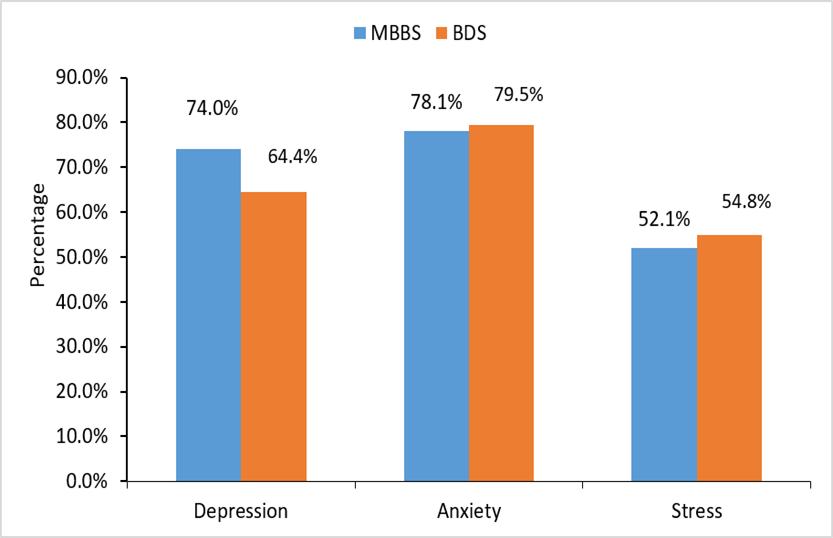
Figure: 1 Bar graph showing percentage of depression, anxiety and stress in MBBS and BDS students
DISCUSSION
This research revealed that proportion of psychological distress was high among both groups, with anxiety being the most common condition (78.8%), followed by depression (69.2%) and stress (53.4%). Depression was descriptively more common among MBBS students than BDS students (74.0% vs. 64.4%), whereas anxiety (78.1% vs. 79.5%) and stress (52.1% vs. 54.8%) were slightly more common among BDS students. Comparable findings have been reported in a research conducted in Saudi Arabia by Mirza et al. (2021). According to his research medical students showed considerable depressive symptoms [12]. Similarly a study by Priyanka Shah (2021) in Nepal showed that the overall percentage of depression, anxiety and stress within first year students enrolled in medicine were found to be 44%, 59.3% and 45.1% which is less than the result of our research [16]. Research from South India by Mallaram (2024) corroborates this finding that symptoms associated with depression, anxiety and stress are notably higher during initial phase of medical education, especially in students with poor stress management.[17]. The slightly increased depression among MBBS students could be explained by the heavy basic science workload during the first year, adaptation to college life, concerns about academic performance and heightened competition [18]. Contrary to our findings, a study conducted in 2025 reported that medical students experienced significant fewer depressive symptoms and anxiety compared with their non-medical counterparts [20]. In contrast, the slightly elevated anxiety and stress observed in BDS students could be linked to early clinical exposure and psychometric training in dentistry, leading to greater performance anxiety compared to first year MBBS students [21]. The present results align with study carried out by Luggasy (2025). The study reported by him demonstrated considerable depression, anxiety and stress in dental students. His results showed that depression, anxiety and stress affected 54.79%, 58.9% and 57.53% of dental students respectively [13]. In the present study, first year BDS students demonstrated high percentage of anxiety and stress that is consistent with the results reported by Malikkarjuna in 2026. In his study the 61.3% of undergraduate dental students showed moderate to severe levels of anxiety [22]. Our findings differ from those reported by (Jabali in 2025), who observed a greater levels of stress (38.2%) and anxiety (42.4%) in medical students than students pursuing dental education (30.4% and 24.7%) [23]. Importantly, the lack of a significant variation among the two cohorts is itself a valuable finding. This indicates that the typical challenges of health professional education, such as academic demands, geographic relocation, adaptation to university life and the mental strain of entering a healthcare profession, produce a similar level of psychological impact among both medical and dental students. These results suggest that interventions for mental health should address universal stressors experienced by first year health professional students rather than being restricted to individual programs. These outcomes emphasize the importance of mental health support system provided by educational institutions. They should focus on building supportive environments by offering stress management programs, mentorship initiatives and mental health support system to minimize emotional strain and enhance student well-being.
CONCLUSION
This study concludes that anxiety is the common psychological condition among first year MBBS and first year BDS students. Depressive symptoms were more pronounced among MBBS students, whereas anxiety levels were higher in BDS students. Nevertheless, statistical analysis revealed no significant difference between the two groups. These results emphasize the need to address mental health challenges in medical and dental students through prompt evaluation and facilitative learning environments.
Author Contributions:
HF, IRH, WA, SK:
Each author made substantial contributions to the conception and design of the study, or acquisition, analysis, and interpretation of data.
All authors were involved in drafting the manuscript or critically revising it for important intellect content.
All authors approved the final version of the manuscript to be published and agree to be accountable for all aspects of the work.
REFERENCES
- Raza N. Impact of Gender, Living of Area, and Academic Streams on Mental Health of College-Going Students. International Journal of Indian Psychȯlogy. 2025 Jun 30;13(2). http//doing.org/10.25215/1302.474
- Al-Najdi, S., Mansoor, A., Al Hayk, O. et al. Silent struggles: a qualitative study exploring mental health challenges of undergraduate healthcare students. BMC Med Educ 25, 157 (2025). https://doi.org/10.1186/s12909-025-06740-8
- FA Alrashed, AM Alsubiheen, H Alshammari, SI Mazi, et al. Stress, Anxiety and Depression in pre-clinical medical students: Prevalence and Association with Sleep disorders. Sustainability 2022.14(18), 11320. https://doi.org/10.3390/su141811320
- MS Beshr, IA Beshr, H AI Qubati The prevalence of depression and anxiety among medical students in Yemen: A cross sectional study. Journal of Affective Disorders 2024(352) 366-370 https://doi.org/10.1016/j.jad.2024.02.080
- Córdova Olivera, P., Gasser Gordillo, P., Naranjo Mejía, H., La Fuente Taborga, I., Grajeda Chacón, A., & Sanjinés Unzueta, A. Academic stress as a predictor of mental health in university students. Cogent Education, 2023; 10(2). https://doi.org/10.1080/2331186X.2023.2232686
- T Perez, MC Pardo, Y Cabellos, M Peressini. Mental health and drug use in college students. Should we take action. Journal of affective disorders 2023;338:32-40 https://doi.org/10.1016/j.jad.2023.05.080
- Shafiee A, Mohammadi I, Rajai S, Jafarabady K, Abdollahi A. Global prevalence of anxiety symptoms and its associated factors in older adults: A systematic review and meta-analysis. J Gen Fam Med. 2025;26:116–127 https://doi.org/10.1002/jgf2.750
- Fang, Y., Yang, M., Huang, W. et al. The evaluation of depression, anxiety, and stress among undergraduate dental students in graduation year in Mainland China: a cross-sectional study. BMC Med Educ 25, 543 (2025). https://doi.org/10.1186/s12909-025-07141-7
- MM Rahman, S Sultana, UK Alam, I Abdullah Depression among medical students in Bangladesh: A systematic review and meta-analysis protocol on prevalence and associated factors BMJ open 2025-102916 https://doi.org/10.1136/bmjopen-2025-102916
- Braim FM. Prevalence and Predictors of Depression Among First-Year Medical Students in the Kurdistan Region of Iraq: A Cross-Sectional Study.) Jowkar Z, Fattah Z, Khorshidi Asl Z, Hamidi SA, Stress. Sleep quality, and academic performance among dental students in Shiraz, Iran. Int J Dent. 2022;2022:3781324. https://doi.org/10.1155/2022/37813
- Mirza AA, Milaat WA, Ramadan IK, Baig M, Elmorsy SA, Beyari GM, Halawani MA, Azab RA, Zahrani MT, Khayat NK. Depression, anxiety and stress among medical and non-medical students in Saudi Arabia: an epidemiological comparative cross-sectional study. Neurosciences Journal. 2021 Apr 1;26(2):141-51. DOI: https://doi.org/10.17712/nsj.2021.2.20200127
- Lugassy D, Naishlos S, Shapinko Y, Zissu S, Lahav RS, Shely A, Ben-Izhack G. Analysis of stress, anxiety, and depression among dental students and dentists: a cross-sectional questionnaire-based survey. BMC psychology. 2025 May 23;13(1):550. . https://doi.org/10.1186/s40359-025-02884-w
- Dutta G, Rajendran N, Kumar T, et al. (January 10, 2023) Prevalence of Depression Among Undergraduate Medical Students in India: A Systemic Review and Meta-Analysis. Cureus 15(1) DOI: 10.7759/cureus.33590
- de Oliveira Viana, M.Á., Porto, É., dos Santos Dantas, L. et al. Depression, Anxiety, and Stress in Dental Students and Associations with Sociodemographic Variables and the Academic Environment. Trends in Psychol. (2024). https://doi.org/10.1007/s43076-024-
- Shah, P., Sapkota, A. & Chhetri, A. Depression, Anxiety, and Stress among First-year Medical Students in a Tertiary Care Hospital: A Descriptive Cross-sectional Study. JNMA J. Nepal. Med. Assoc. 59 (236), 346–349 (2021). doi: 10.31729/jnma.6420
- Mallaram, G. K. et al. Stress, Anxiety, and Depression in the First-year Students of Medical Education: A Prospective Cohort Study from a Women’s Medical College in South India. Indian J. Psychol. Med. ;02537176241282100. (2024). https://doi.org/10.1177/02537176241282100
- Polat, Mehmet Emrah DDS, PhDa; Demircioğlu, İbrahim Ethem DMDa,*. Psychological distress among dentistry students: A cross-sectional study on depression, anxiety, and stress using the DASS-21 Scale. Medicine 104(35). doi: 10.1097/MD.0000000000043939
- Tripathi R, Alqahtani SS, Meraya AM, Makeen HA, Tripathi P, Pancholi SS. Evaluation of depression, anxiety, and stress among university healthcare students. Journal of Applied Pharmaceutical Science. 2022 Oct 4;12(10):078-87.DOI: 10.7324/japs.2022.121008
- Carrard V, Bourquin C, Berney S, Bart PA, Bodenmann P, Berney A. Comparison of mental health and burnout between medical and nonmedical students. Plos one. 2025 Oct 9;20(10):e0328145.https://doi.org/10.1371/journal.pone.0328145
- Alhilali K, Husni M, Almarabheh A. Frequency of burnout in dental students and its relationship with stress level, depressive, and anxiety state. Middle East Current Psychiatry. 2024 Mar 18;31(1):21. https://doi.org/10.1186/s43045-024-00411-y
- Mallikarjuna R, Nalawade T, Al Senaidi AH, Al Mashari BS, Al Bakri MA. Clinical anxiety in undergraduate dental students: a cross-sectional study and global comparison. Frontiers in Psychology. 2026 Aug 3;17:1815430.https://doi.org/10.3389/fpsyg.2026.1815430
- Jabali AH. Psychological well-being of medical and dental students in Saudi Arabia post worldwide pandemic: a cross sectional study. BMC Medical Education. 2025 Sep 1;25(1):1238. http://doi.org/10.1186/s12909-025-07817-